- Author Antoon Melissen
- Date November 2023
With no other artist was Wolleh’s connection as close as with Günther Uecker. This is evidenced by numerous book projects as well as his photographic documentation of Uecker’s actions over nearly two decades.
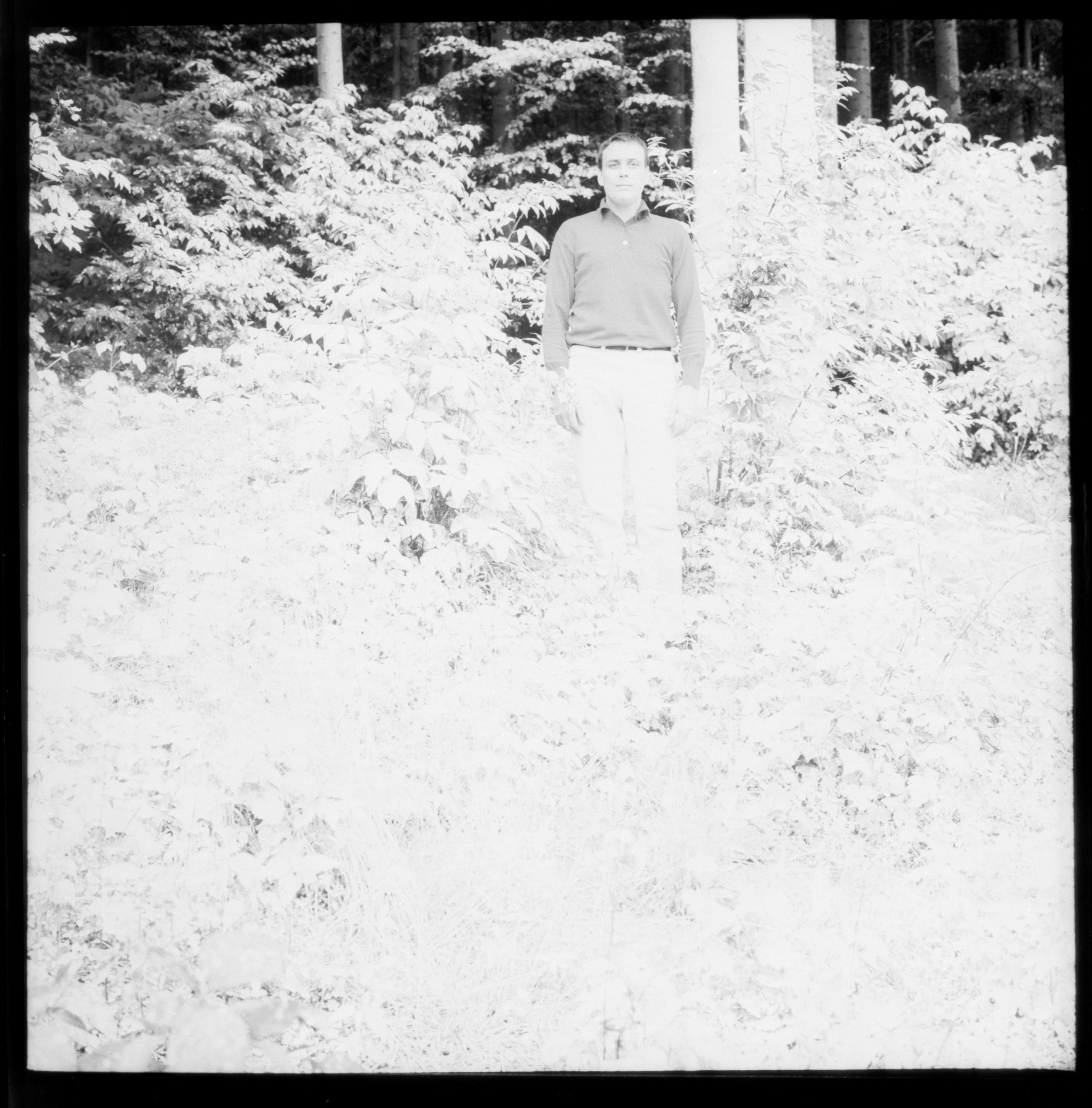
It is an idiosyncratic work from the collection of the Staatliches Museum Schwerin, a photo portrait of Günther Uecker bristling with nails. Photographer Lothar Wolleh (Berlin, 1930-London, 1979) took the picture in 1963, in his characteristic square Hasselblad camera format. Later that same year, Uecker covered the entire surface of this photo with protruding nails. A meaningful, artistic intervention on a number of levels that resulted in a new reality – and in a new title, Selbstportrait (1963). Which in no way erased, but instead redefined – and instrumentalized - the photographer’s contribution.
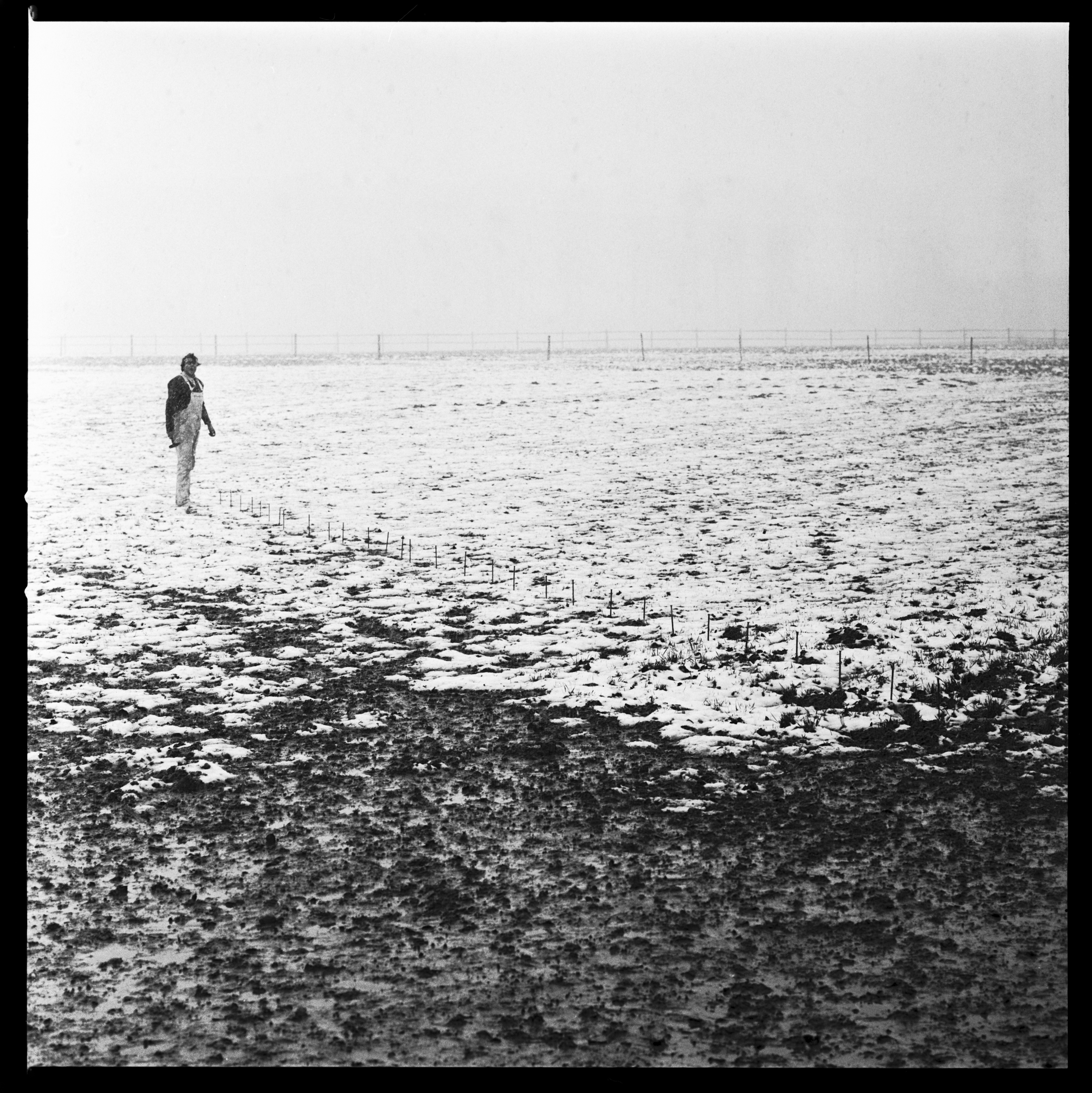
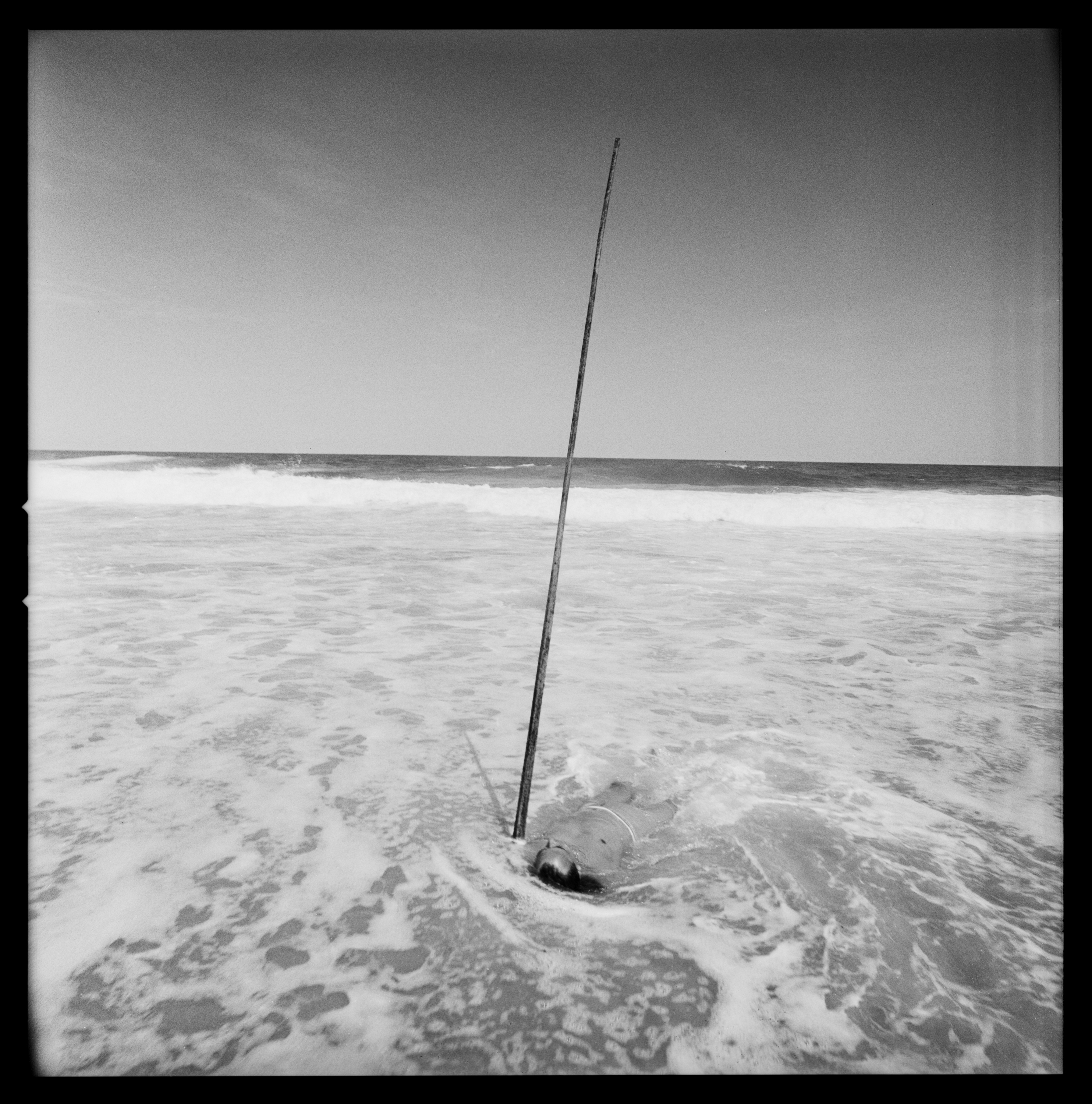
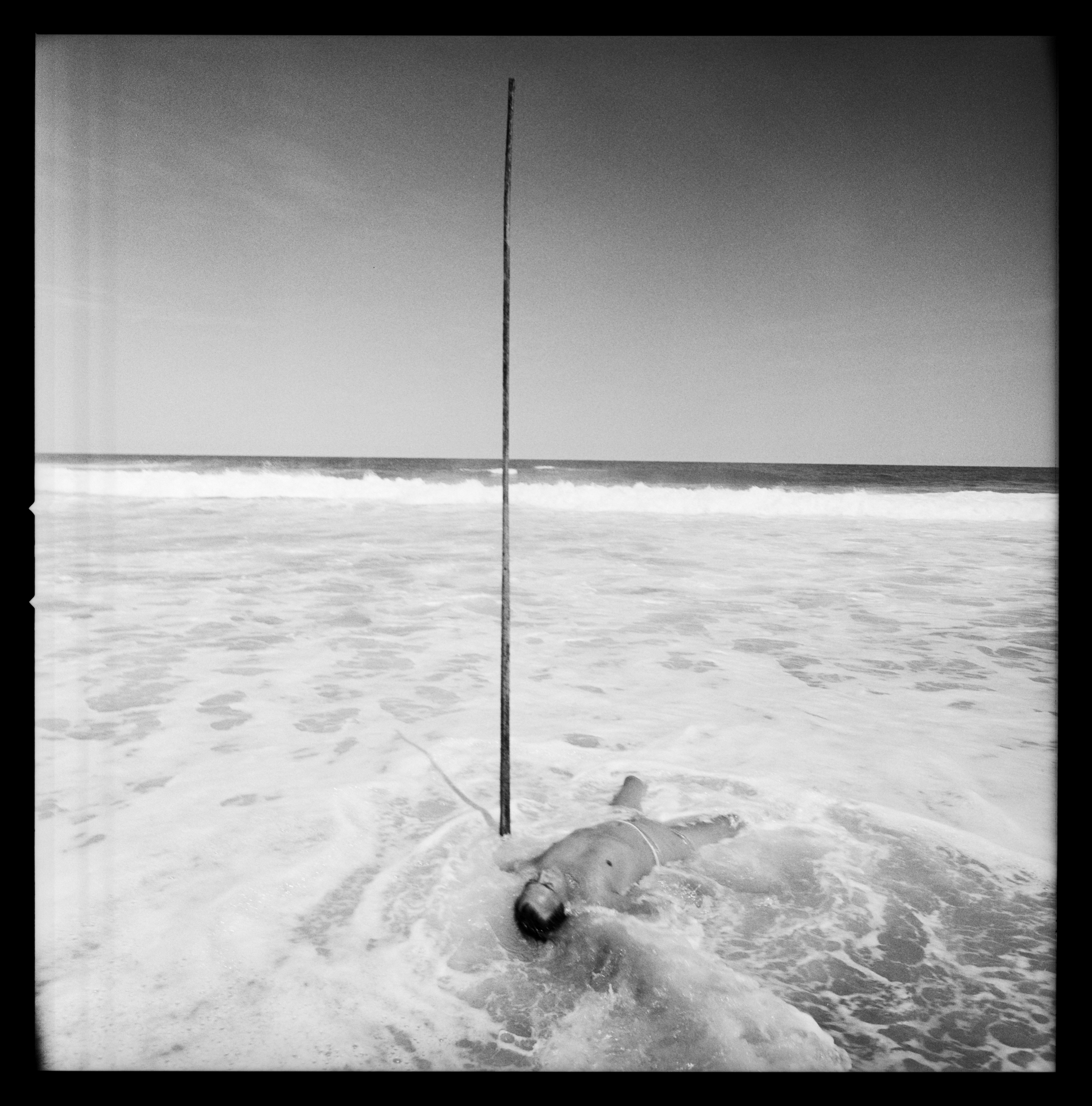
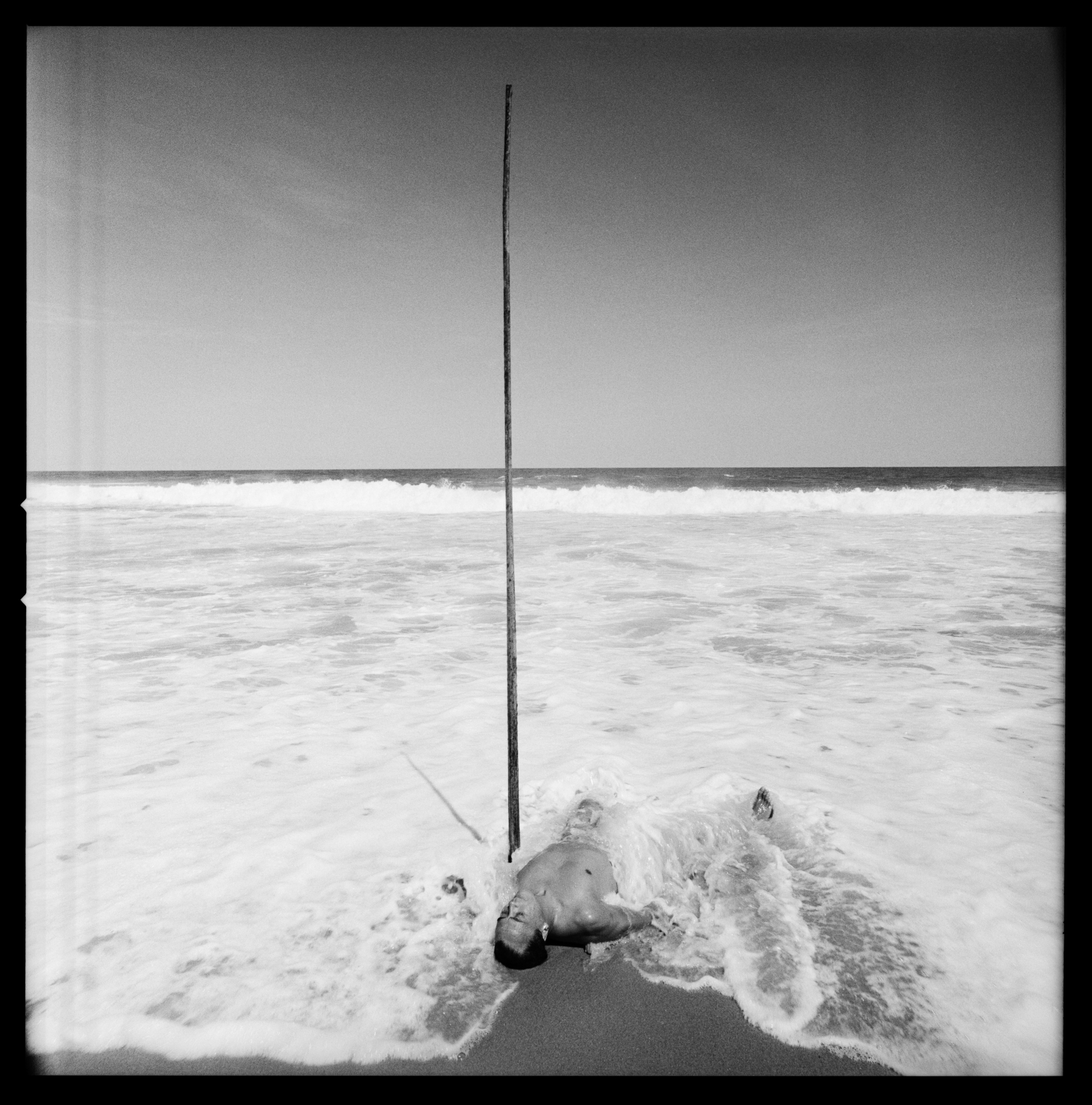
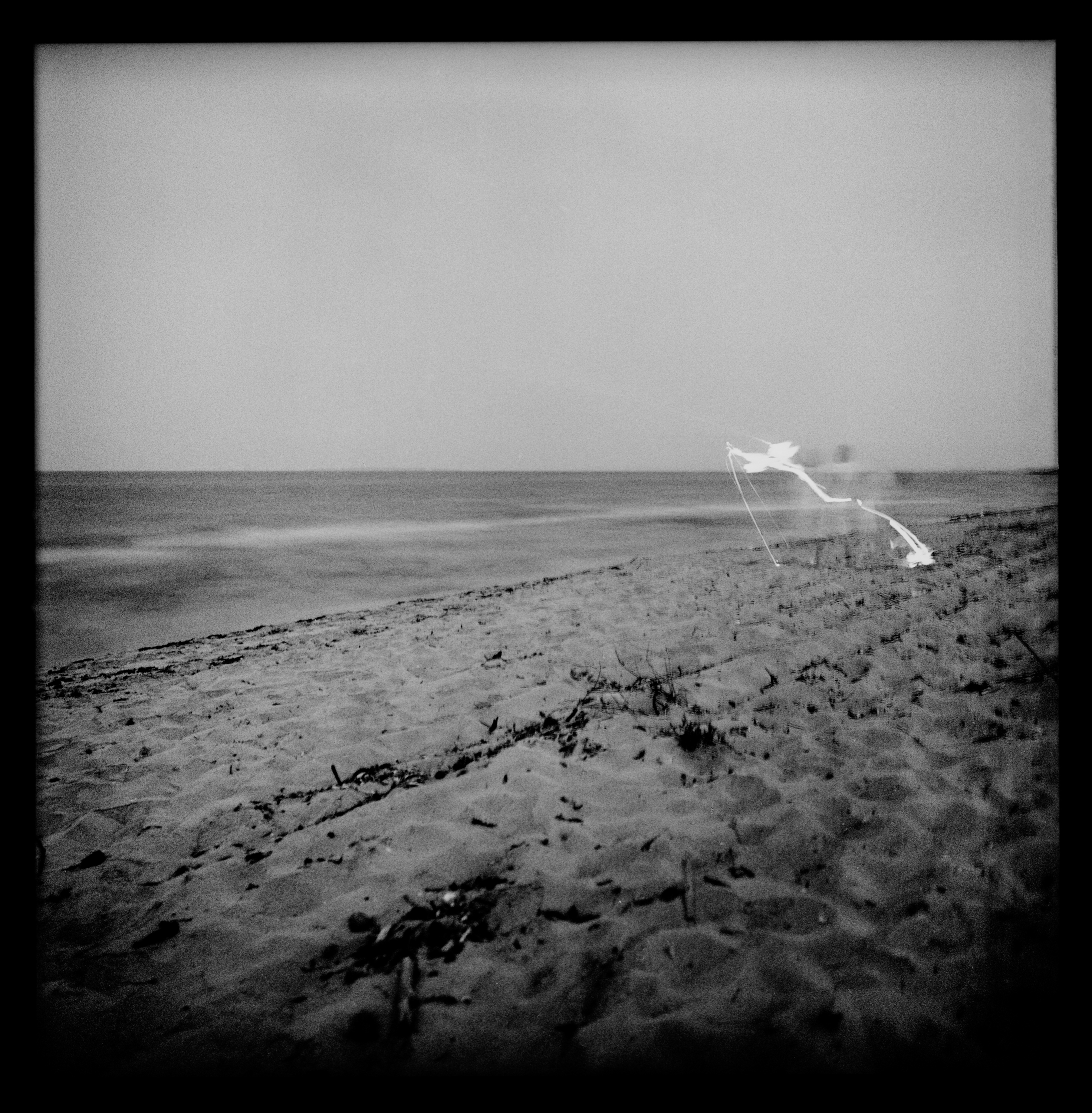
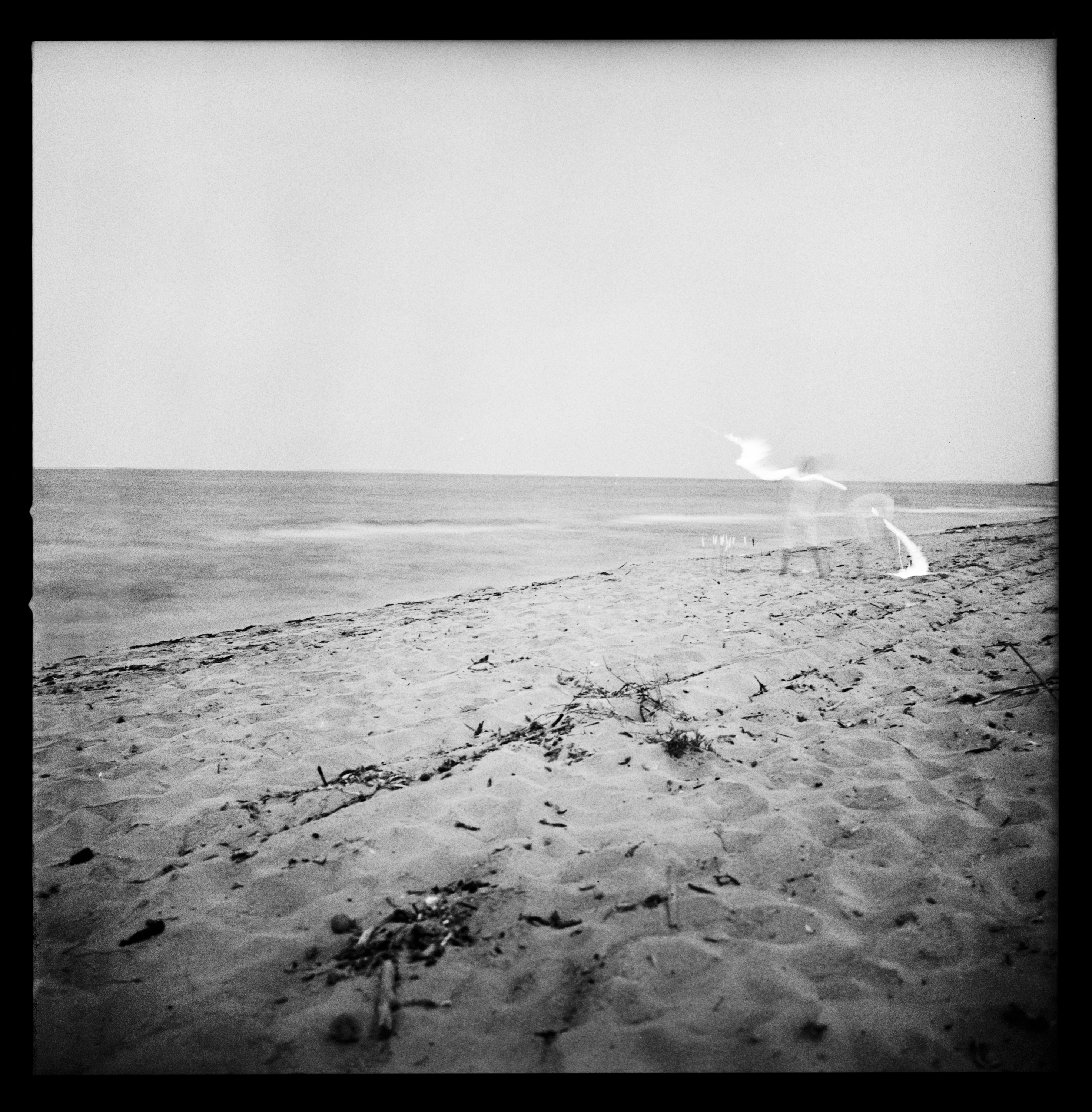
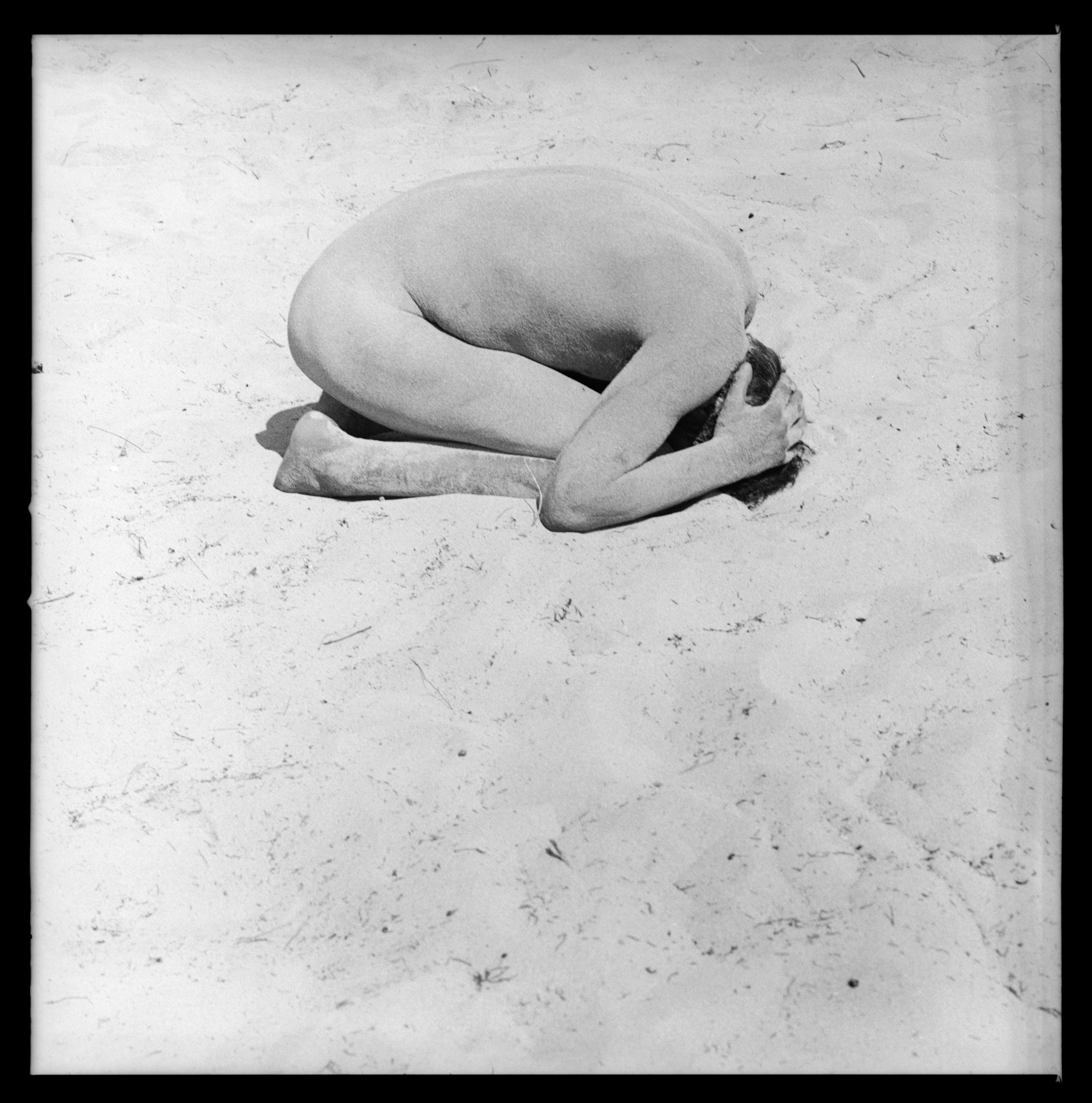
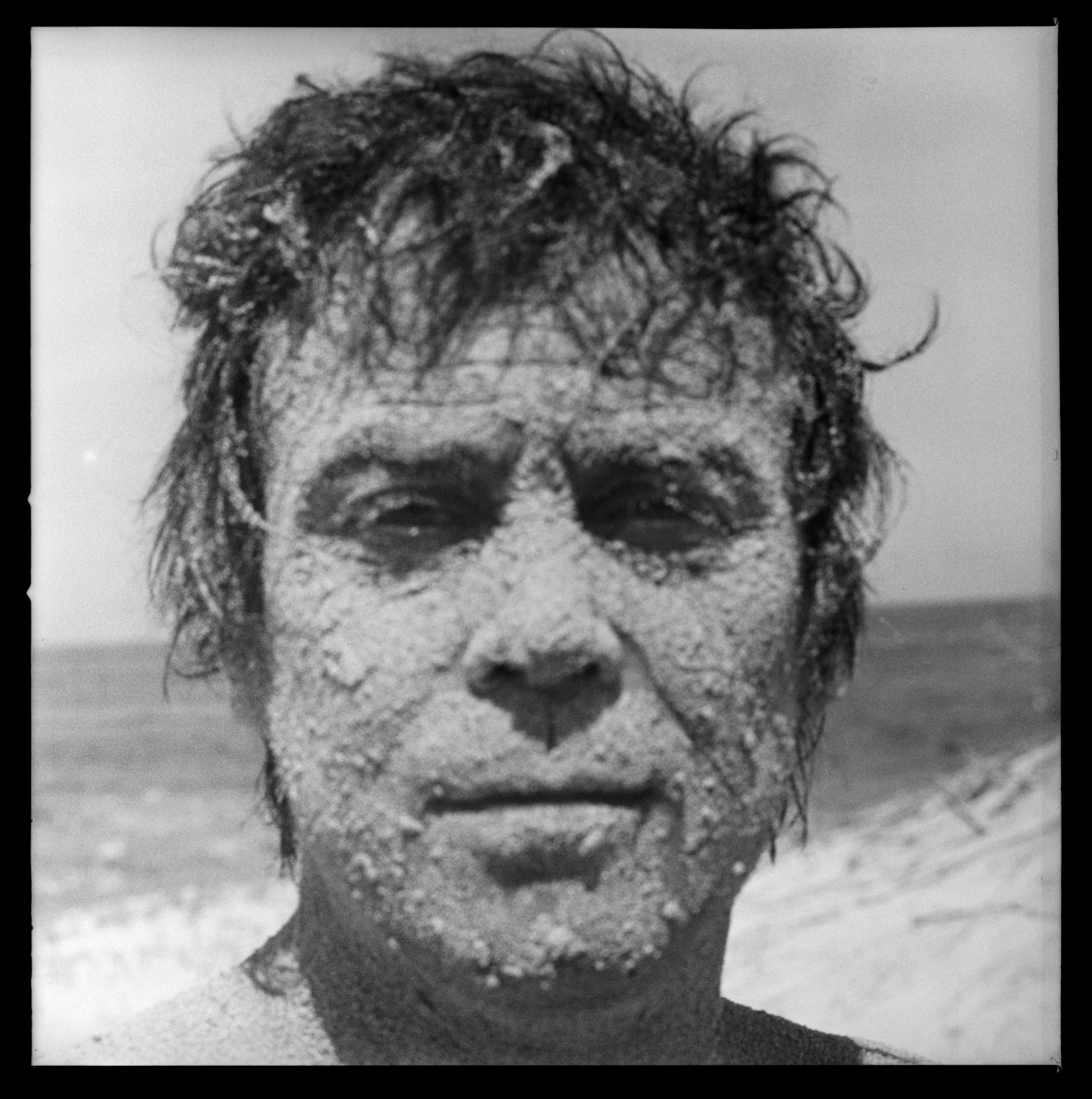
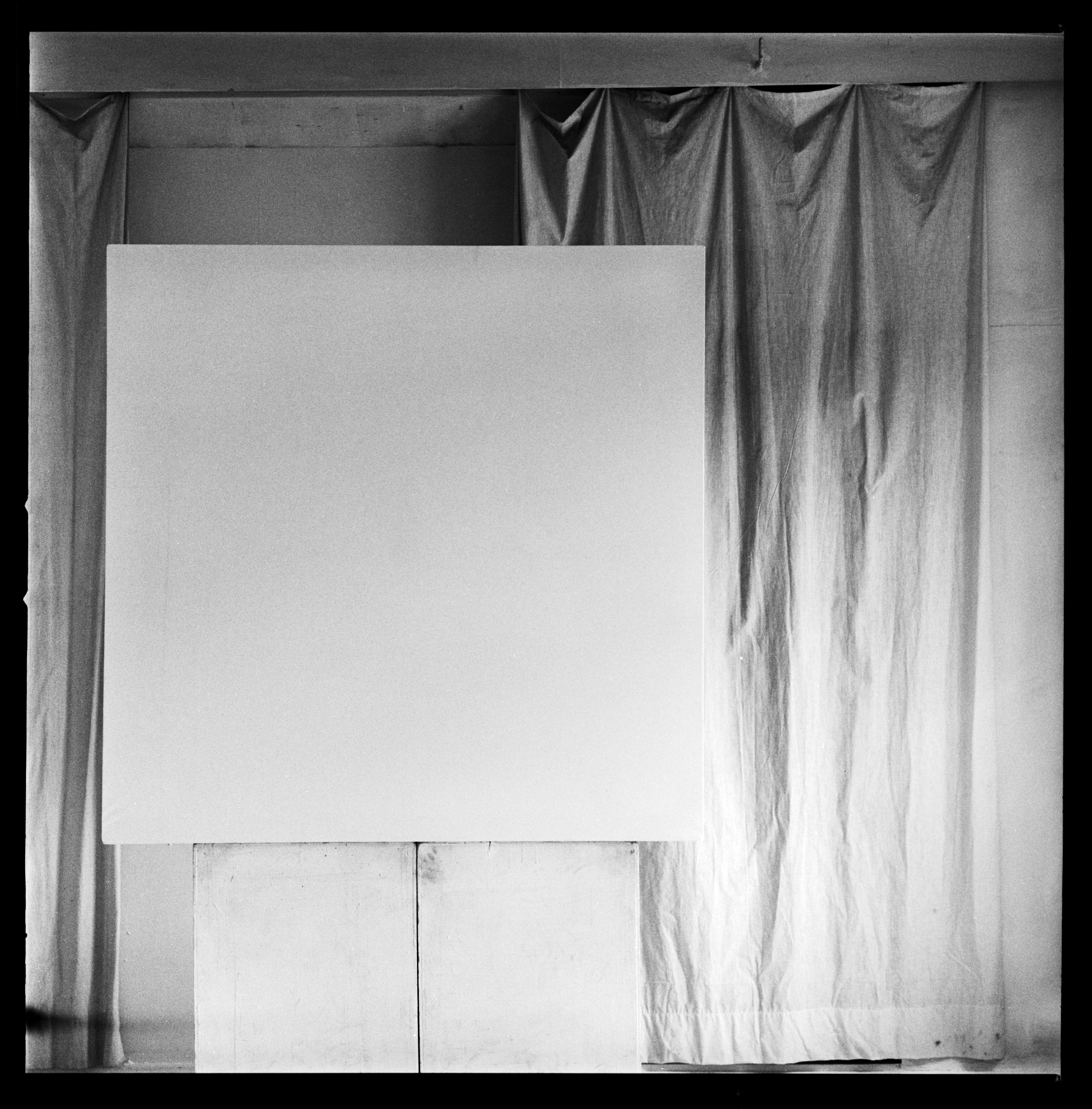
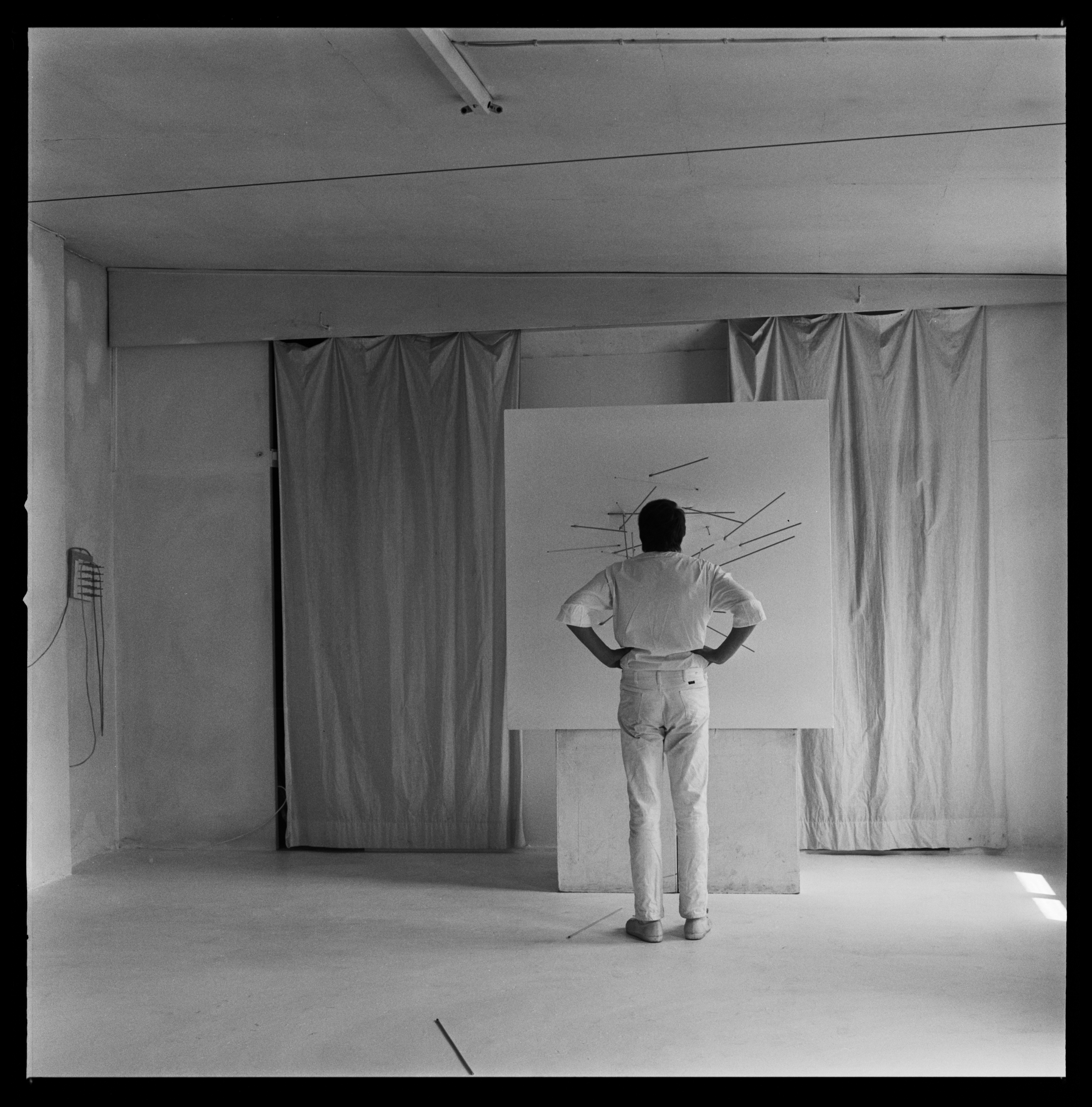
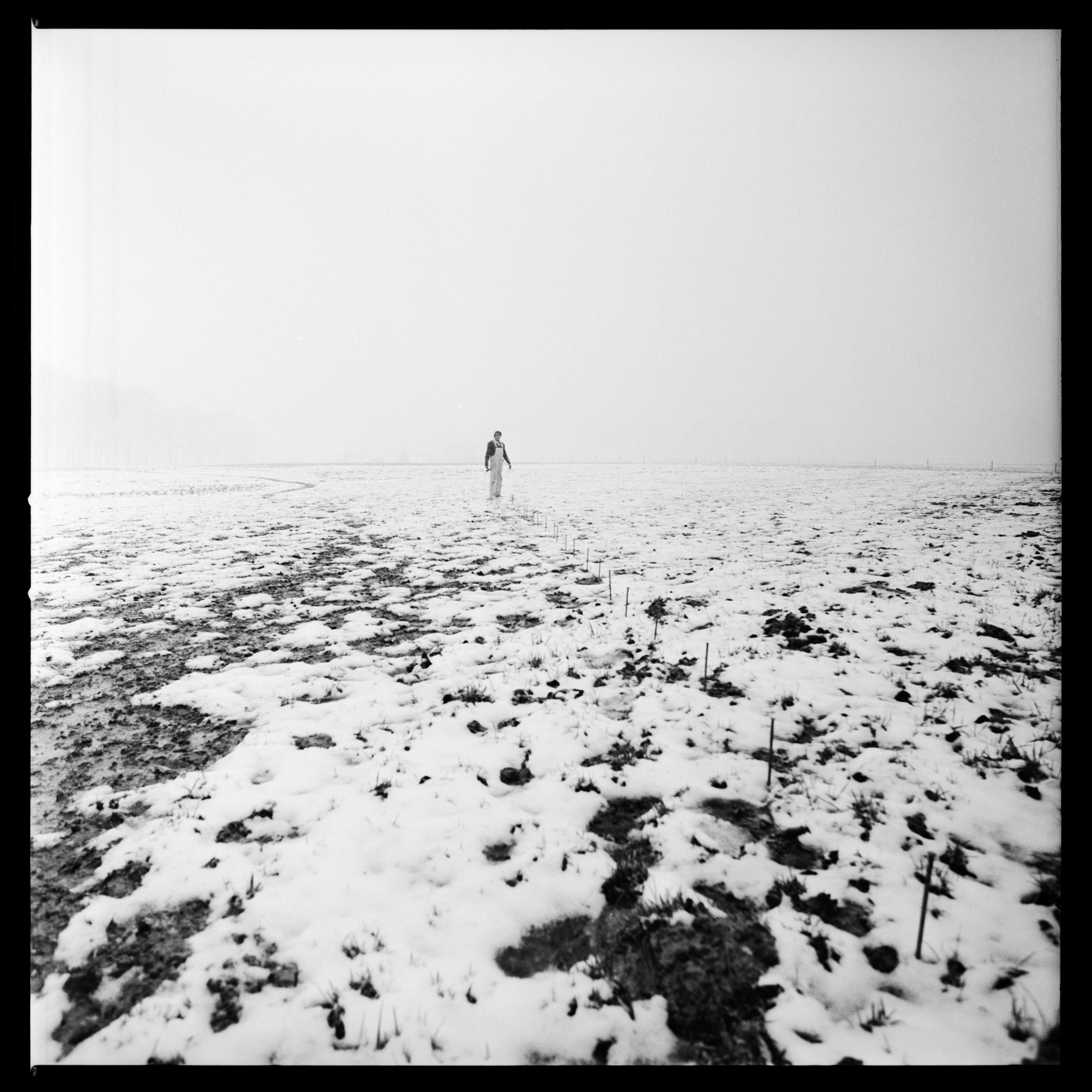
It is this early work that we might view as a pars pro toto for the fruitful association between Günther Uecker and Lothar Wolleh. Activities of various forms and kinds brought the two artists together in the early 1960s. Their friendship and shared artistic premises resulted in portraits, studio and exhibition photos, the publication of cooperative artist’s books and editions. Within Günther Uecker’s complex of Künstlerische Handlungen, the Aktionen photographed by Lothar Wolleh, includ- ing Sandmensch (1970), Beschiessung des Meeres (1970) and Äquatorlinie (1971), merit particular attention.
The emphasis in these Aktionen lies on the ephemeral, performative character of the action; there is, after all, no ‘object’ that endures as an autonomous work of art or ‘relic’ of the Aktion. And it is precisely this that lends Wolleh’s photography a unique status. Photography offers us a foothold, we might say: thanks to the documentary character of the recorded moment, we are able to form an idea, post facto, of the work process and dramaturgy of the Aktion. However, when we examine Lothar Wolleh’s complex photography, it seems scarcely tenable that the image is of a merely ‘indicative’ and documentary nature. Two elements are significant here: the strategic application of the image that Günther Uecker sought to achieve – and that Wolleh acknowledged – and Lothar Wolleh’s own artistic conception.
‘Kunst ist öffentlich’
The Aktionen photographed by Lothar Wolleh took place without the presence of an audience, accidental or otherwise. The idea that this ostensibly private character does not set them apart from those in a more public setting is underscored by Uecker’s inclusive concept of art: ‘Privat gibt es in dem Sinn nicht, den der Künstler ist öffentlich.’
From the beginning of the 1960s, artists breached the four walls of their studios. The relationship between art and reality had to be upended; the ‘world’ became a laboratory, stage and playground, with spectators as participants in an image- or meaning-forming process. This is the context in which Günther Uecker’s earliest Aktionen came into being, although they equally took place without an audience. Artists increasingly concerned themselves with how their ideas were communicated, and more and more often they took personal charge of this. With manifestos, self-initiated publications and exhibitions, artists positioned themselves as curators and communicators. Alliances with filmmakers and photographers – Reiner Ruthenbeck, Gerry Schum, Manfred Tischer, Gerd Winkler and Lothar Wolleh – were of strategic importance in this.
The instrumentalization of the photographic image – the targeted application, the aspect of ‘propaganda’, as Uecker called it – was an important motivation for his collaboration with Lothar Wolleh. Günther Uecker’s place of origin, the former East Germany, also plays a significant role in this. The Aktion as the application of a manifest, public position can be linked to Agitation Propaganda, a collective term for a powerful, intentional dissemination of ideas. It is certainly significant here that, as a celebrated advertising photographer, Lothar Wolleh stood at the intersection of two worlds. From the moment he partnered with leading German advertising agencies, he also sought connections as an autonomous photographer with artists from avant-garde circles. The earliest portrait photos of Günther Uecker were taken as early as 1963. Until his death in 1979, Wolleh portrayed over 160 artists, and these contacts often led to jointly conceived artist’s books, editions and collaborative works.
Lothar Wolleh’s collaboration with Günther Uecker was particularly fruitful, and his links with commerce and mass media were of formative significance. In 1971, the artist’s book Günther Uecker. Eine Dokumentation von Lothar Wolleh (dubbed Das Nagelbuch, the nail book) was published, a graphics edition and a photo book with texts by Uecker, encased in a nail-pierced cassette. Another joint project is the cassette Zum Schweigen der Schrift oder die Sprachlosigkeit (1978-1979), in which Wolleh’s photography was modified by hand by Uecker, and then published as a graphics edition. It is this ‘three-stage rocket’, the combination of photography, text and a work of art, that typifies so many of Lothar Wolleh’s projects. Among artists, the Dutch Nul artist Jan Henderikse (b. 1937) argues, there was ‘(…) a kind of buzz. Wolleh was at home in the world of advertising, and we quite liked the idea of propaganda for your own work!’
Conveying of a message
While the physical presence of an audience was never a pre-requisite, for Günther Uecker a communicative connection was all the more crucial. He described this communication, the bridging between art and world, in 2003 as ‘the interpretation of the trivial realm and art’. And it is precisely in this formulation – penetration, the conveying of a message, the search for connection – that we recognize the instrumental contribution of the photographer within the context of the Aktionen.
Several years earlier, in 1961, the element of Uecker’s Aktion was one of the most eye-catching – and communicative – contributions to the event Zero: Edition, Exposition, Demonstration, inside and in front of Alfred Schmela’s Düsseldorf gallery. With this public Aktion, Uecker transposed the artistic conception of ZERO to the public domain – a innovative component of ZERO that would be widely replicated in the years that followed. The event was documented by photographers Mandred Tischer and Reiner Ruthenbeck, and we may well wonder: was this the moment that Uecker realized how valuable the instrumentalization of the photographic image could be as expression and component of his Künstlerisches Handeln?

Shared Premises
And yet it will not have been only Wolleh’s connection to the domain of advertising photography that appealed to the imagination. His artistic conception – his distinctive visual idiom – also contributes, after all, to communication and representation. Photographic experimentation is one of the principal under- pinnings of Lothar Wolleh’s work, and this clearly sets his work apart from documentary photography. This love of experimentation was the most significant legacy of Otto Steinert, Wolleh’s professor at art school, the famed Folkwangschule für Gestaltung in Essen. Wolleh was part of the first generation of post-war students to be introduced to photography as a full-fledged artistic discipline. Steiner searched for conceptually usable motifs, harking back to the experiments of pioneers of the interwar period, of the Neue Sachlichkeit and Das Neue Sehen. Students were encouraged to experiment with over- and underexposure, with depth of field contrasts, reflection and explicit compositions. A photo was not to be merely documentary, but served to represent an idea, a point of view.
We might argue that photography of such a distinct nature is at odds with the autonomous status of the Aktionen; that, in other words, the photographer’s conception should not be allowed to be of ‘added value’. In the case of the photographed Aktionen, however, shared premises were precisely what made a collaboration possible, without compromising the autonomy of their works of art.
If we look for connecting elements, we quickly arrive at a shared fascination with light. Light and the ‘non-colour’ white held an important symbolic value for many post-Second World War artists, after years of hopelessness and darkness. In that regard, Lothar Wolleh’s personal history was equally formative for his artistic practice. In the wake of the Second World War and the partition of Berlin, Wolleh was sentenced in 1951 to forced labour in the Siberian coal mines.7 These years of darkness, of ‘living underground’, and his fascination with the polar lights are what, by his own account, brought him to photography.8 The artists found each other here, in the representational qualities of light and its transformational potential. The fact that Wolleh, according to Heinz Mack, was sensitized by ZERO, certainly plays a part.9 And while Günther Uecker considers ZERO a brief chapter, these aspects retained their significance for him as well.
Lothar Wolleh’s archives include a series of curious photos. In the grey, dark setting of the coal mines of the Ruhr, we see Uecker and Wolleh as colliers, grey from the coal dust. It was an adventure that they went on together, and that was documented in photographs. For both artists, the symbolic significance of this undertaking cannot be easily overestimated, and it is here that we find intersections that point to a shared attitude.[10] Wanting to relate to reality, to the concrete world of working, feeling and thinking human beings: that was a guiding principle for Lothar Wolleh’s photography. For Günther Uecker, who also counts the work process and the studio practice as part of his Künstlerische Handlungen, the descent into the mines was equally the expression of an artistic conception – a conception that is distinct from the formalistic, idealistic or intellectual ‘setting of the tone’ of a conventional exhibition.
Lothar Wolleh’s photos of Uecker’s Aktionen reveal the artists’ shared, sophisticated vision of documentation and publicity, without sacrificing the artistic element in the process. They attest to the pure pleasure of creative exchange, and to a mutual trust and respect. And to what may be seen as one of their most important commonalities, the idea that a work of art cannot be captured exclusively in a single, tangible and ‘finite’ label.
1 Katrin Salwig, interview with Günther Uecker (2 February 2003), in: Klaus Gereon Beuckers (ed.), Günther Uecker. Die Aktionen, Petersberg 2004, p. 118.
2 For an analysis of this evolution, see Tiziana Caianiello, Mattijs Visser (eds.), The Artist as Curator. Collaborative Initiatives in the International ZERO Movement 1957-1967, Düsseldorf/Ghent, 2016.
3 Jan Henderikse in conversation with the author, 1 July 2022.
4 Salwig, op. cit. (see note 1), p. 118.
5 Three issues of the journal ZERO were published under the editorship of Heinz Mack and Otto Piene (April 1958, October 1958, July 1961); the first two to accompany the Abendausstellung (evening exhibitions) organized in their Düsseldorf studios, the third on the occasion of the event at Galerie Schmela.
6 ZERO in capital letters refers to the international art movement, ‘Zero’ to the collaboration between Heinz Mack, Otto Piene and Günther Uecker.
7 Wolleh returned to Berlin in 1956, following successful negotiations by chancellor Konrad Adenauer for the early release of German prisoners of war.
8 An analysis of Wolleh’s photography, in connection with his biography, can be found in: Antoon Melissen, ed., Joseph Beuys und Lothar Wolleh. Das Unterwasserbuch Projekt, Berlin/Bielefeld, 2021.
9 Heinz Mack in conversation with the author, 6 November 2019.
10 When Uecker discusses the perception and meaning of his Künstlerische Handlungen in 2003, he refers to mine workers: ‘Sie zeigten, dass sie das, was ich mache, sehr gut verstehen könnten. Man kann es vergleichen mit der Lichtwahrnehmung, die eine ganz eigenartige ist, wenn sie aus dem Dunkel der Erde kommen.’ Salwig, op. cit. (see note 1), p. 116.
The article by Antoon Melissen was first published in:
Xiao Xiao: Günther Uecker’s Artistic Actions: An Intercultural Study Based on the Daoist Concepts of Wuwei, Ganying, and Ziran.
In: Notes on Uecker – Print, vol. 2, 2023. Berlin/Munich: Deutscher Kunstverlag, 2023, p. 75-89.
ISBN 978-3-422-80133-2.